
Lead Times and Customization: What Hotel Buyers Should Know Before Ordering OS&E / FF&E
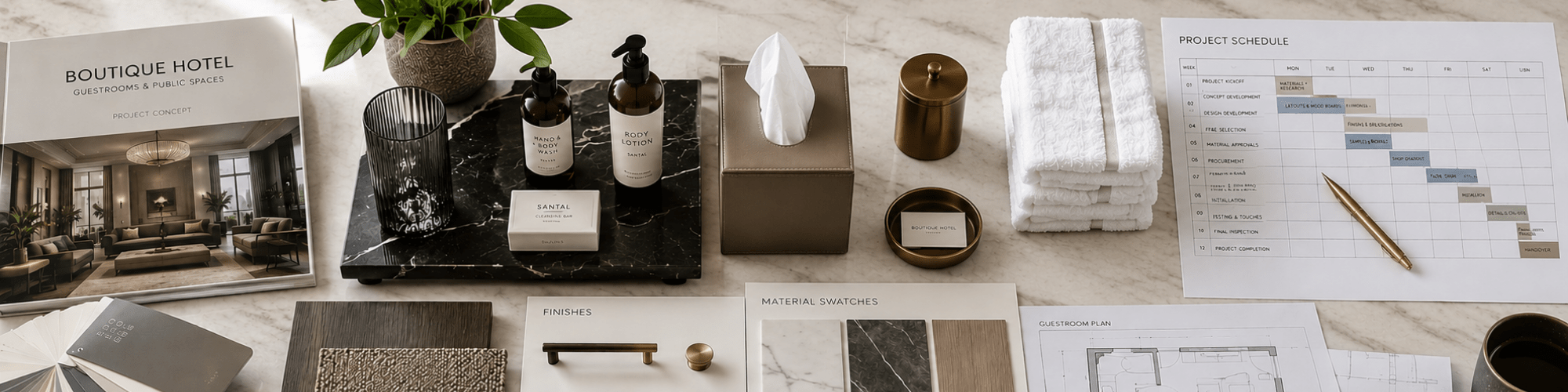
When sourcing hotel OS&E and FF&E, the product itself is only part of the equation. Timelines, customization requirements, approvals, and production schedules can have just as much impact on a project’s success as the specification itself.
Whether you’re planning a new hotel opening, guestroom renovation, brand refresh, or replacement program, understanding how lead times work can help avoid delays, reduce surprises, and keep projects moving forward.
Start with Your Project Timeline
One of the most common mistakes in hospitality procurement is beginning product selection before fully understanding the project schedule.
Before requesting quotes or reviewing finishes, it’s helpful to establish:
- Installation date
- Opening date
- Delivery requirements
- Brand approval timelines
- Sample review deadlines
- Quantity requirements
These milestones help determine whether in-stock hospitality products, customized solutions, or fully bespoke pieces are the right fit for the project.
In many cases, the timeline itself becomes the first specification requirement.
Understanding the Difference Between In-Stock and Custom
Not every hospitality project requires customization.
For properties working against compressed schedules, in-stock OS&E can provide a practical solution for guestrooms, bathrooms, coffee stations, bar areas, luggage racks, wastebaskets, and other hospitality accessories.
In-stock programs are often used for:
- Property refreshes
- Replacement programs
- Accelerated openings
- Brand standard updates
- Phased renovations
- Multi-property consistency initiatives
Custom programs, on the other hand, offer greater flexibility when specific materials, dimensions, finishes, branding, or functional requirements are needed.
The tradeoff is time.
Additional design development, approvals, sampling, and production all contribute to longer project schedules.
What Can Be Customized?
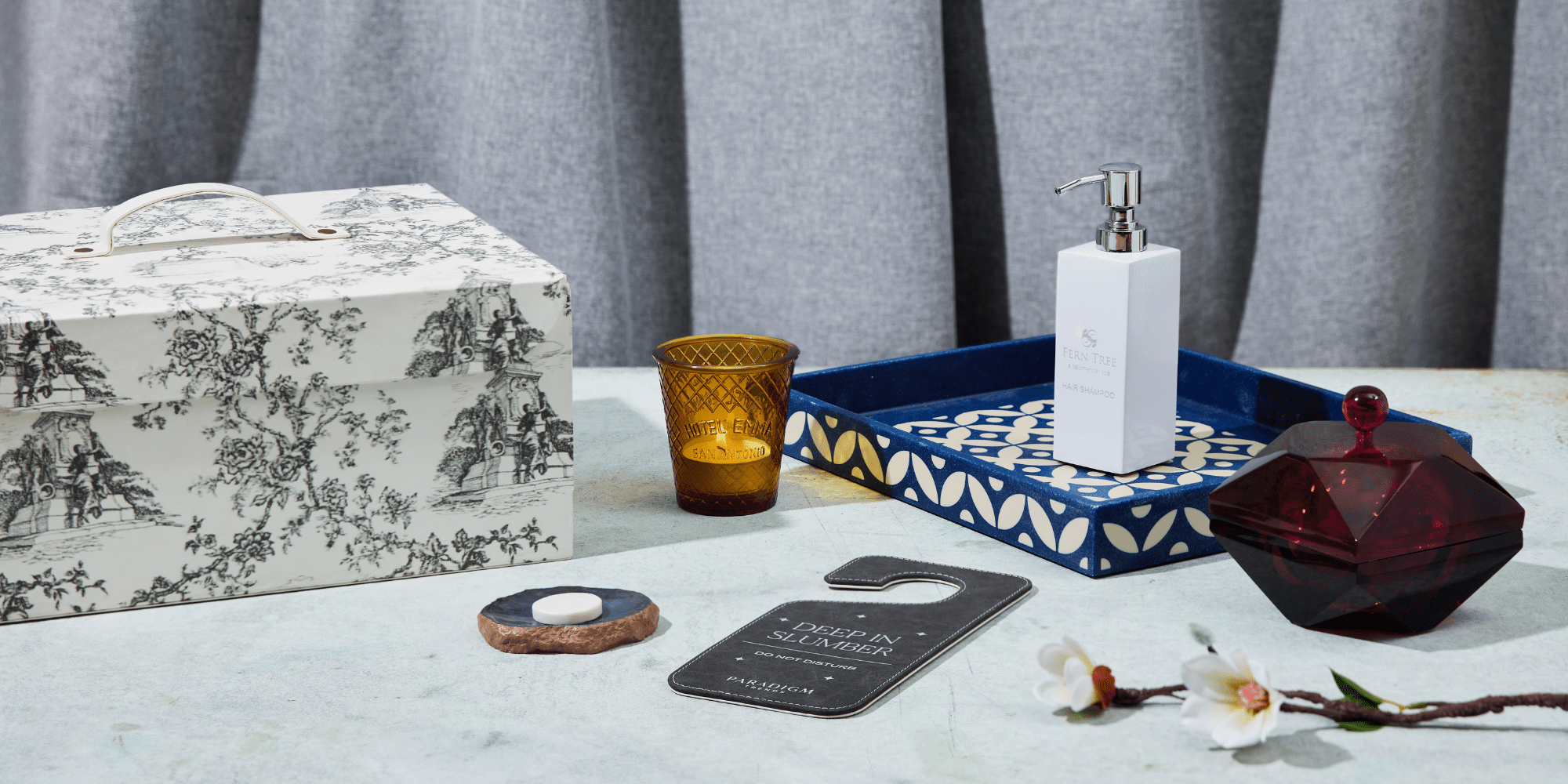
Customization can range from minor modifications to entirely new product development.
Common hospitality customization options include:
Finishes
- Paint colors
- Powder coating
- Enamel coating
- Metal finishes
- Wood stains
- Custom color matching for Pantone and RAL
- COM
Dimensions and Configuration
- Adjusted sizing
- Additional compartments
- Alternate layouts
- Modified functionality
Not every project requires extensive customization. Often, a small adjustment can help align a product with brand standards while maintaining efficient production timelines.

Why Sampling Matters
Sampling is one of the most important stages in the hospitality procurement process.
A sample provides an opportunity to evaluate:
- Material quality
- Finish accuracy
- Color consistency
- Functionality
- Construction details
- Brand alignment
For custom hospitality accessories, sampling can also help identify potential issues before full production begins.
Skipping this stage may save time initially, but it can create larger challenges later in the project.
The Approval Process
Hospitality projects often involve multiple stakeholders.
Depending on the property, approvals may include:
- Ownership groups
- Brand representatives
- Purchasing teams
- Operations teams
- Interior designers
- Asset managers
Building sufficient review time into the schedule helps prevent last-minute changes that can impact production and delivery timelines.
The earlier key decision-makers are aligned, the smoother the process tends to be.
Production Is Only One Part of the Timeline
When discussing lead times, many buyers focus exclusively on manufacturing.
In reality, production is only one phase of the process.
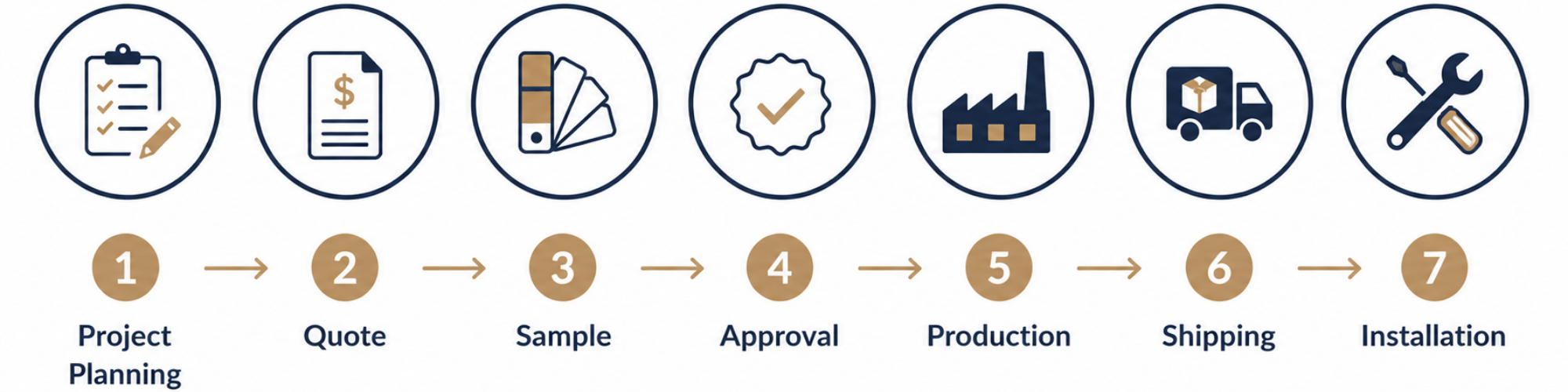
A typical project timeline may include:
- Product selection
- Quoting
- Design development
- Sampling
- Approvals
- Production
- Quality review
- Shipping and logistics
- Installation
Each stage plays a role in determining the overall project schedule.
Understanding the full process helps establish realistic expectations from the beginning.
Planning for Reorders and Future Needs
Hospitality projects rarely end once installation is complete.
Products may need to be reordered as:
- Rooms are added
- Properties expand
- Brand standards evolve
- Replacement programs are implemented
When evaluating OS&E suppliers and FF&E suppliers, it’s worth considering not only current project requirements but also future operational needs.
Long-term consistency can be just as important as initial delivery.
Choosing the Right Path for Your Project
The best hospitality projects balance design goals, operational requirements, budget considerations, and timeline realities.
In some cases, an in-stock solution may provide exactly what’s needed.
In others, customization creates an opportunity to support brand standards, guest experience goals, or unique operational requirements.
Understanding the relationship between lead times, customization, sampling, approvals, and production helps hospitality teams make more informed decisions and build project schedules that support successful outcomes.
Planning a Hospitality Project?
Whether you’re evaluating in-stock hospitality accessories or exploring custom OS&E solutions, understanding the process early can help keep projects on track.
Our team works with hotels, resorts, management groups, purchasing companies, and hospitality designers to support projects from initial planning through final delivery.