
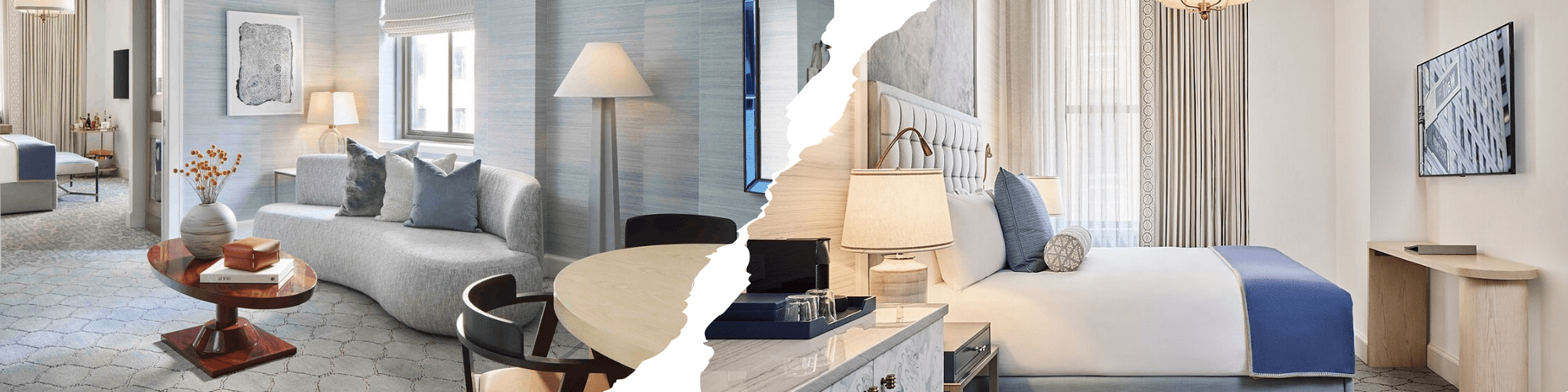
How to Align Guestroom Accessories With Room Type, Guest Expectations, and Operational Reality.
Not every room in a hotel does the same job. So why are they often specified the same way?
Suites and standard rooms operate under different conditions. They carry different expectations, different patterns of use, and different pressure on both design and operations. When those differences are ignored, specifications tend to feel either excessive or underdeveloped.
A more effective approach is to align each room type with its actual use, rather than applying a single solution across the entire property.
This is not about adding more to suites or stripping back standard rooms. Rather, it’s about specifying with intent.
Start With How The Room Is Actually Used
Suites and standard rooms serve distinct roles, and that distinction should guide their specification.
In suites, guests tend to stay longer and make fuller use of the room. They interact with the bar, spend time at the desk, and use a wider range of surfaces throughout their stay. As a result, details are more visible and more likely to be noticed.
Whereas standard rooms move at a different pace, since turnover is higher, layouts are more compact, and most interactions are brief. The focus shifts toward clarity, efficiency, and the ability to reset the room quickly and consistently.
When the way a room is used changes, the accessories within it should follow that same logic.
Hotel Suite Accessories Require a More Complete Setup
In suites, OS&E and FF&E contribute directly to how the room is experienced. These pieces should feel integrated into each zone rather than limited to a set of essentials.
Bar and coffee areas
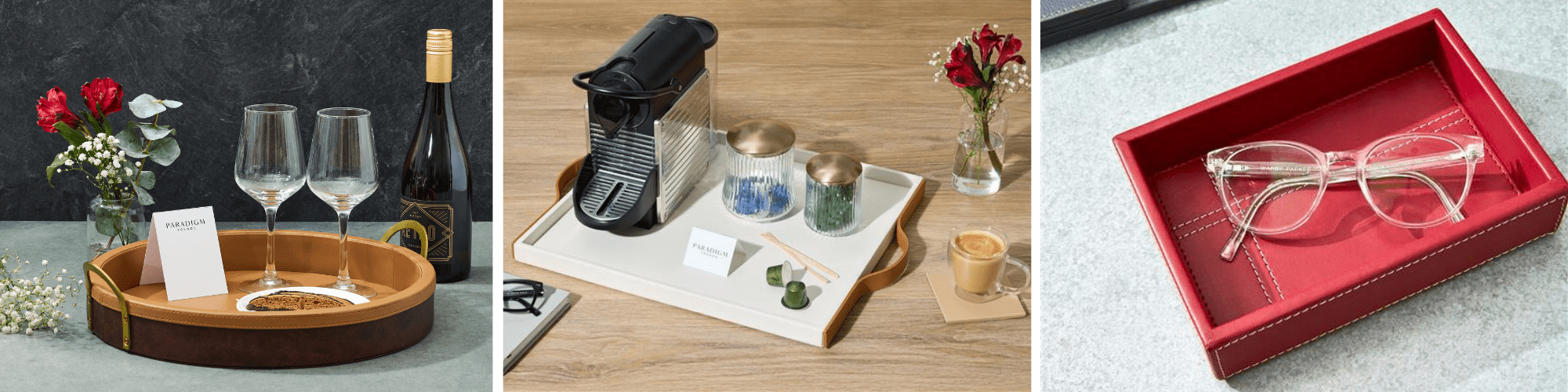
Suites often include space for hosting or extended in-room use, which calls for a more developed setup. Larger trays with defined sections, coordinated bar elements, and well-organized coffee solutions create a clearer sense of structure. These details extend the overall design direction into moments when guests actively engage.
Bath spaces that carry presence
Suite bathrooms tend to be more open and used more frequently, which makes material choices more noticeable. Heavier materials such as marble or stone help anchor the vanity, while amenity trays and canisters create a deliberate layout.
Additional surfaces that need resolution
With more space comes more surfaces, and empty surfaces often look unfinished. Desk accessories, storage elements, and a few well-placed decor items help complete the room without introducing clutter.
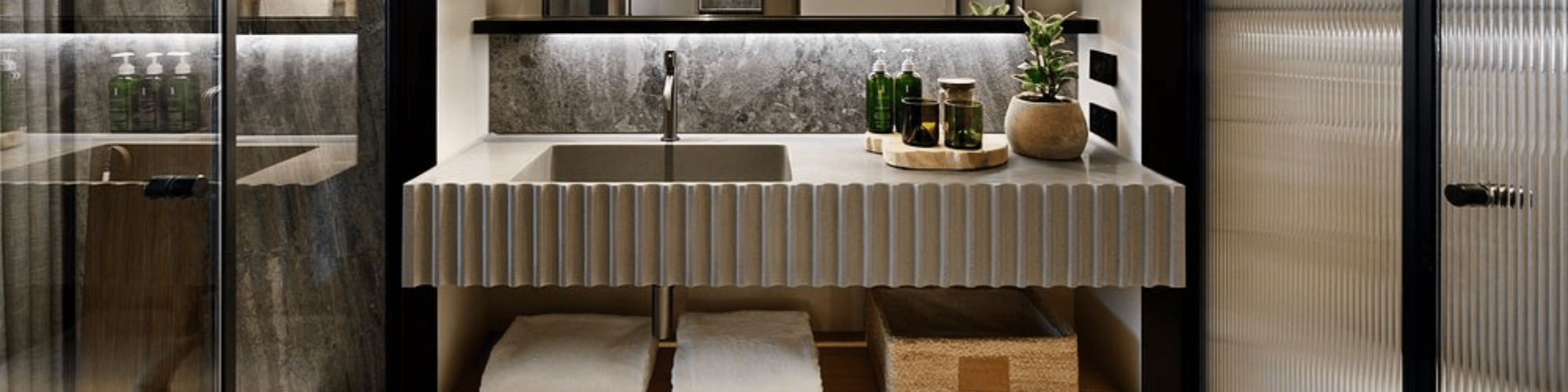
Standard Hotel Room Accessories Benefit from Clarity and Repeatability
This is where consistency and efficiency carry the most weight.
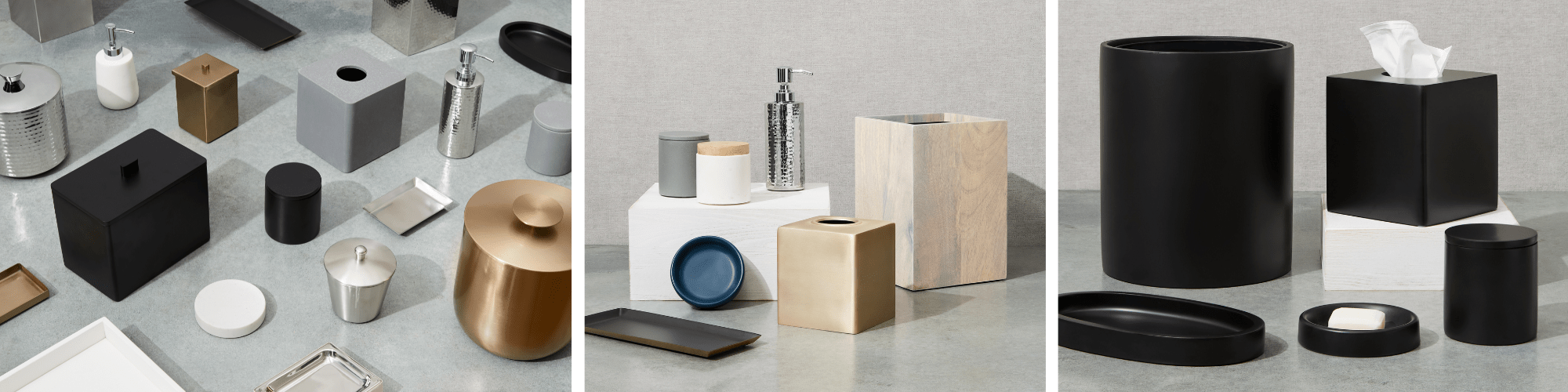
Bath setups that simplify placement
Coordinated products reduce variation and make placement more predictable. This helps maintain a clean presentation while supporting faster room resets.
Coffee solutions that respect the footprint
In many properties, especially in urban markets, space is limited. Compact trays that integrate storage for pods, cups, and condiments keep the setup contained and easy to navigate for both guests and housekeeping.
A more controlled visual approach
Well-aligned pieces create a clearer result than blindly adding more components. Consistent finishes and repeatable layouts ensure that each room looks and functions the same way over time.
Maintain a Consistent Design Language Across Hotel Guestroom Accessories
While suites and standard rooms differ in scale and complexity, they should still feel connected and consistent.
This connection is established through material selection, finish direction, and form. A collection used in suites can often be translated into a simplified version for standard rooms by adjusting scale or material, rather than changing direction entirely.
For example, a marble bath set in a suite can be paired with a resin version in standard rooms, allowing both to align visually while responding to different operational needs.
Customization should support the system
Customization is most effective when it reinforces the overall approach rather than introducing one-off solutions.
Adjusting materials, finishes, or dimensions can help differentiate room types and align with brand standards. At the same time, maintaining a shared foundation across categories ensures that products can be reordered, replaced, and scaled without disruption.
The goal is to extend a design language, not fragment it.
Operational performance still applies across both
Regardless of room type, accessories must support how the property runs.
Products should be easy to clean, durable enough to withstand repeated use, and consistent enough to reorder without variation. Suites may carry more detail, but they are still reset daily. Standard rooms may be more streamlined, but they still need to maintain a strong visual standard over time.
Ignoring operations at the specification stage often leads to inconsistencies later.
Right-size the specification
Suites and standard rooms do not require the same level of investment, but both require the right level of attention.
Suites allow for more layering, more material contrast, and more visible detail. Standard rooms rely on clarity, efficiency, and repeatability. When each is specified appropriately, the result is a property that feels consistent without forcing every space into the same solution.
Final Thought
Specifying luxury is less about adding more and more about placing detail where it has the most impact.
Suites and standard rooms each serve a different role within the property. When accessories are aligned with that role, both the guest experience and daily operations benefit.
That is where consistency becomes intentional rather than imposed.
Lead Times and Customization: What Hotel Buyers Should Know Before Ordering OS&E / FF&E.